
When should you put up Christmas lights in San Antonio?
Backyard Boys Lawn Co., San Antonio · September 27, 2026
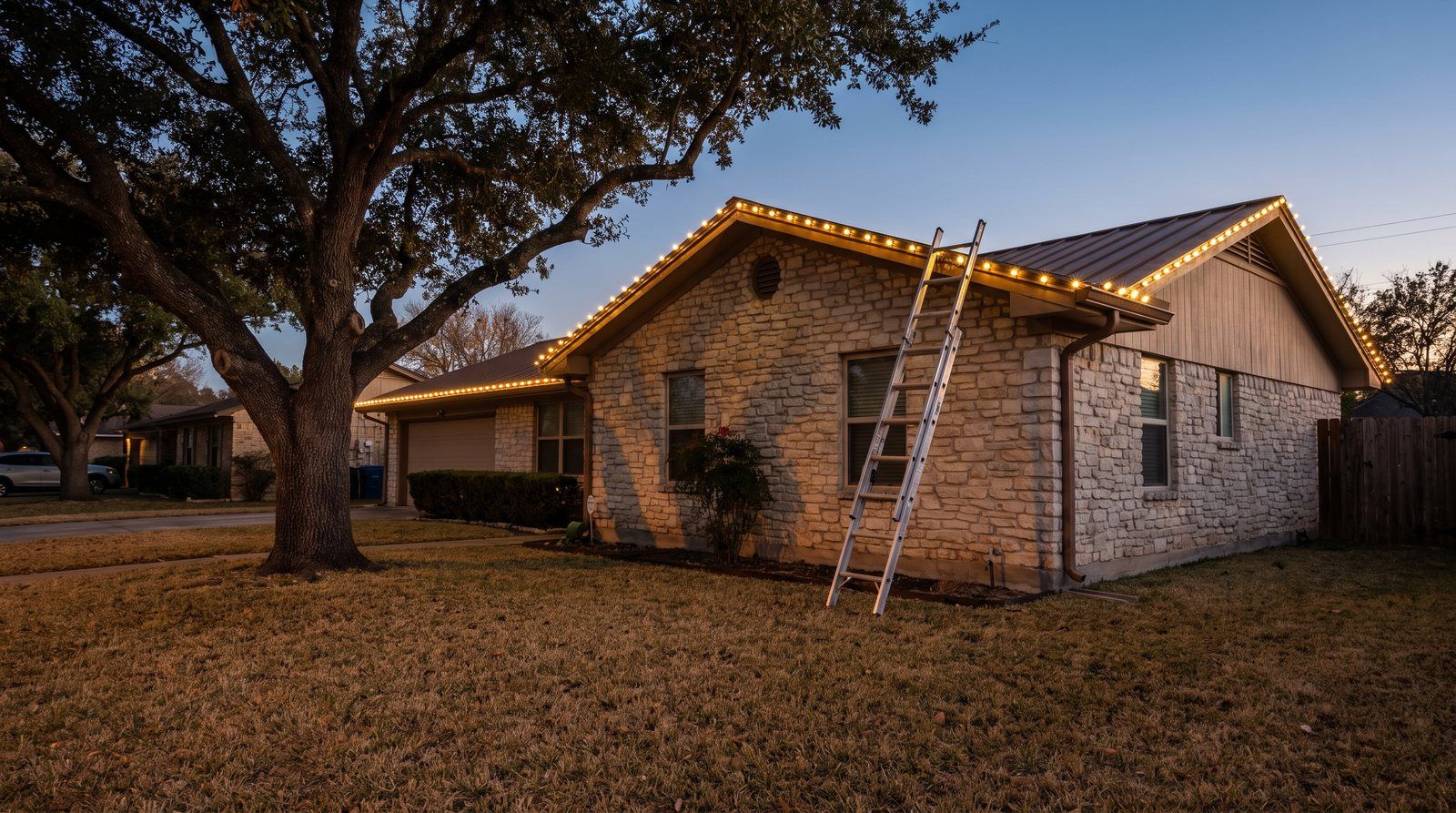
Most San Antonio homes light up the weekend after Thanksgiving, the same weekend the River Walk lights come on. The smart move is to hang them in early November, while the weather is mild and your ladder has a calm day, then switch them on after Thanksgiving. Plan to take them down in early January.
When do most people put up Christmas lights?
The weekend after Thanksgiving is the start of the season here. The River Walk lights up each year the day after Thanksgiving at the Ford Holiday River Parade, and this year that is Nov. 27, 2026. That is when most San Antonio neighborhoods light up too.
Hanging and lighting are two different jobs, though. Nothing says the lights have to go up the same weekend they go on. A lot of homeowners hang them in the first half of November and leave the switch off until Thanksgiving is over.
Why hang them early?
Because the weather is on your side. At San Antonio International Airport, the normal high is about 72 degrees in November and about 65 in December. November is also drier than October, with about 2 inches of rain on average against almost 4.
The bigger reason is the calendar. Thanksgiving weekend is when everyone wants their lights up, so that is when installers are busiest. If you want someone else to do it, book in October. We schedule installs in the order people book, so an early booking gets the widest choice of dates.
Is it safe to put up lights on the roof?
It can be, if you respect the ladder. The U.S. Consumer Product Safety Commission counts about 160 decorating injuries a day during the holiday season, with nearly half of them falls. In one season it tallied about 14,900 emergency room visits from holiday decorating.
OSHA’s ladder rules are written for work crews, and they fit a homeowner just as well:
- Keep three points of contact on the ladder: two hands and a foot, or two feet and a hand.
- Set the base a quarter of the ladder’s working length out from the wall. That is about 1 foot out for every 4 feet up.
- To step onto a roof, the ladder has to extend at least 3 feet above the edge.
- Look up for power lines before you move a ladder, and keep a metal ladder away from them.
- Put the ladder only on a stable, level surface.
A soft, rain-soaked lawn is not a level surface. If the grass is squishy, set the feet on a board or wait a day.
Should you wait for a calm day?
Yes. A ladder with a person on it catches wind, and so does a long strand of lights. The CPSC says to fasten outdoor lights securely to the house or another firm support to protect them from wind damage. Clips that hold the strand tight to the gutter or shingles do that better than a loose drape.
Before anything goes up, the CPSC says to check every set, new or old, for broken sockets, frayed or bare wires and loose connections, and to use only lights with a label from an independent testing lab. Plug in no more than three standard sets on one extension cord, and turn the lights off when you go to bed or leave the house.
In San Antonio
Our holiday weather swings. Most of November is shirt-sleeve weather, then a cold front blows through and the wind comes out of the north for a day. Those front days are the ones to stay off the roof.
Two things are worth doing before the lights go up here. First, clear the gutters. Fall leaves pile up in them, and clips hold best on a clean gutter. Second, walk the roofline from the ground and look at what you are clipping to. Loose shingles and soft fascia board are easier to spot in daylight in November than on a ladder at dusk.
When should you take them down?
Early January. The River Walk lights shine through early January, and most of San Antonio follows that lead. The electrical code has its own limit: temporary wiring for holiday decorative lighting is permitted for no more than 90 days. Lights hung in early November and taken down in the first week or two of January stay inside that.
Take them down on a calm, dry day, with the same ladder rules as putting them up. Coil each strand loosely, mark the ones that gave you trouble, and toss any set with cracked sockets or bare wire rather than saving it for next year.
What to do this week
Walk outside and look up. Measure the roofline you want lit, count your outlets, and pull last year’s lights out to check them. If you want a crew to handle it, call now while October dates are open.
If you’d rather stay off the ladder altogether, we install, maintain and take down holiday lights across San Antonio, and we supply the lights.
Want your lawn handled? Type your address on our site to see your mowing price.
Quick answers
When do most people put up Christmas lights in San Antonio?
The weekend after Thanksgiving is the usual start. The River Walk lights come on the day after Thanksgiving, and that is when most neighborhoods light up too.
Is it too early to hang lights in early November?
No. Hanging them early and waiting to switch them on is common. In San Antonio the normal high in November is about 72 degrees, so it is easier work than in December.
When should I take my Christmas lights down?
Early January is the normal time, when the River Walk lights go dark. The national electrical code allows holiday lighting up for 90 days at most.
Is it safe to put up lights when it is windy?
Wait for a calm day. A ladder and a long strand of lights both catch wind, and the U.S. Consumer Product Safety Commission says to fasten outdoor lights securely so wind cannot pull them loose.
When should I book a light installer?
October. Thanksgiving weekend is when everyone wants their lights up, so the earlier you book, the more install dates you can pick from.
Sources
- Holiday lights on the River Walk, San Antonio River Walk
- Happy holidays start with safety, U.S. Consumer Product Safety Commission
- Holiday decoration safety tips (CPSC-611), U.S. Consumer Product Safety Commission
- Portable ladder safety card, OSHA
- U.S. Climate Normals 1991-2020, monthly temperature and rainfall, San Antonio International Airport, NOAA NCEI
- Holiday lighting and the electrical code (the 90-day rule), IAEI Magazine