
Why is my grass growing so fast in the fall?
Backyard Boys Lawn Co., San Antonio · September 27, 2026
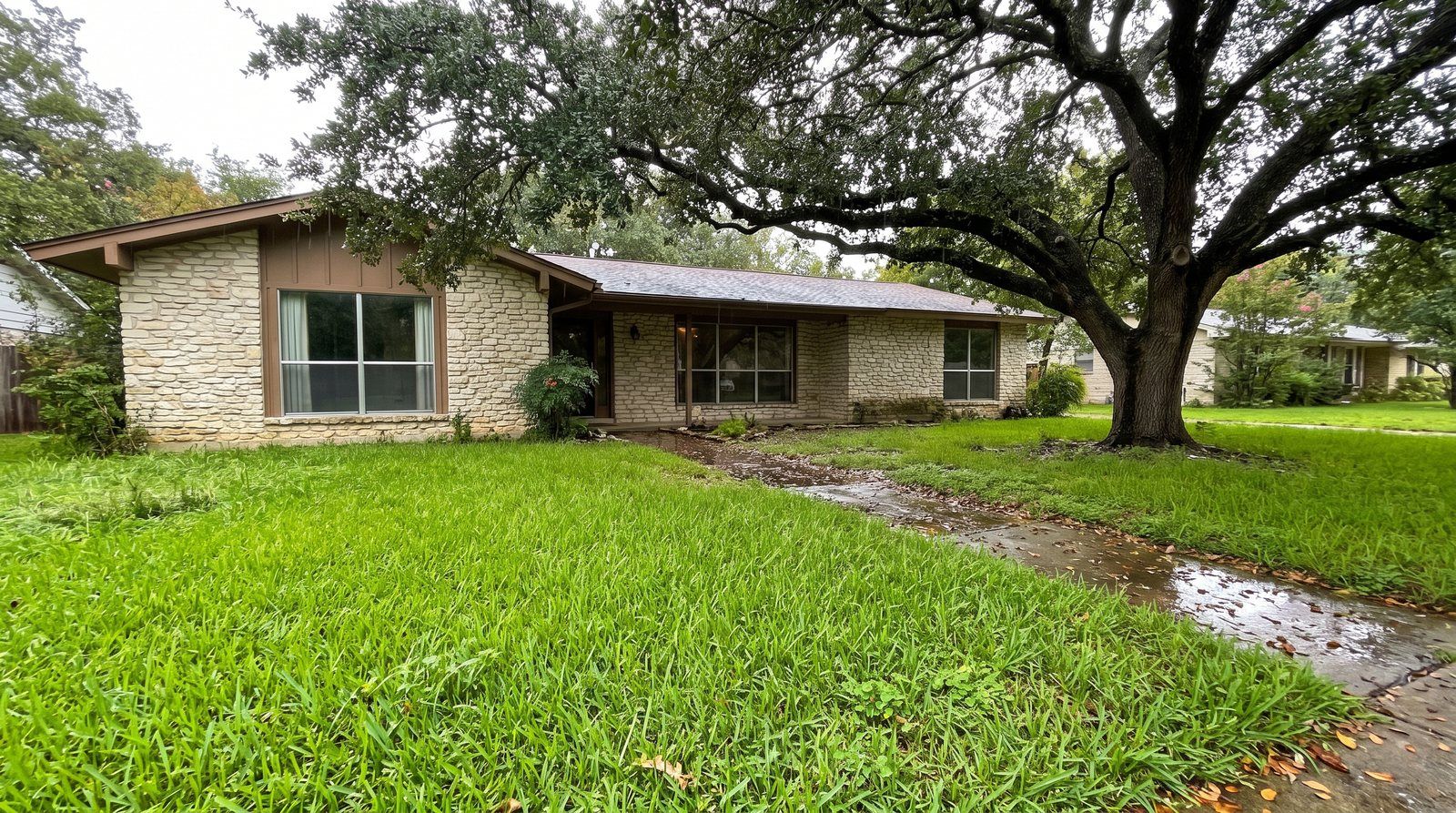
Because fall gives your lawn back what late summer took away. St. Augustine grows best between 80 and 95 degrees, and in San Antonio, September and October bring the normal highs back into that range just as the rain returns. Grass that slowed down in the August heat starts growing hard again, and it keeps going until the nights turn cold.
The heat breaks
August is our hottest month. At San Antonio International Airport, the normal high is 96 degrees in August, 90 in September and 82 in October. That puts August just past the top of the 80 to 95 degree range where St. Augustine grows best, and September and October right inside it.
Texas A&M AgriLife also says Raleigh St. Augustine may yellow and be less aggressive in high summer heat than in cooler temperatures, and the Bexar County AgriLife office calls Raleigh the most common one used in our area. When the heat backs off, the brakes come off.
The rain comes back
On average, September and October are San Antonio’s second and third wettest months, behind only May. Normal rainfall at the airport is 3.88 inches in September and 3.75 inches in October, against 2.15 inches in August.
Heat and dry ground slow a lawn down. AgriLife calls summer dormancy a normal response to heat and drought stress. Add SAWS drought rules that hold sprinklers to one day a week in Stages 1 through 3, and late summer is a hard stretch for grass. A few soaking rains change that fast.
Wet soil feeds the grass
Rain does more than wet the ground. When dry soil gets wet, it releases nitrogen from the organic matter in it, and nitrogen makes grass grow faster.
Turf scientist Micah Woods worked through one example and estimated that the soil released about three times as much nitrogen as the rain itself carried. The biggest boost in his math still came from the water. There is more on that in our guide to whether rain makes grass grow faster.
When does it slow down?
When it gets cold. St. Augustine turns brown or off-color when it goes dormant for winter, and Bermuda goes dormant when the weather turns cool. At the airport, the first freeze comes by Nov. 28 in half of years, and later in the rest.
That lines up with AgriLife’s lawn calendars: mow weekly from March through October, then mow only as needed from November through February.
What to do about it
Keep mowing weekly through October. Skipping a week in a growth spurt is how a lawn gets scalped: AgriLife says scalping is more likely when grass is mowed too infrequently, and its rule is to never remove more than a third of the grass at one time. For St. Augustine mowed at 3 inches, that means mowing before it reaches 4 1/2 inches.
Don’t cut it short to buy time. AgriLife recommends keeping grass at the higher end of its mowing range, because taller grass grows deeper roots. If it already got away from you, lower it over a few mows instead of all at once.
Turn the sprinklers down. In spring and fall, AgriLife says automatic watering can be turned off in favor of watering by hand as needed, and too much water in those seasons can invite large patch, a disease that shows up as circles with yellow to orange edges. SAWS says its summer watering amounts can be cut back or skipped in the fall, depending on the weather.
What this looks like in San Antonio
Put the numbers side by side and fall looks like a second spring. July and August have normal highs of 95 and 96 degrees and the lowest normal rainfall of any month from April through October. Then September and October cool off and get wetter.
On SAWS water, sprinklers get one day a week during drought stages, and SAWS moved back to Stage 3 on Sept. 21, 2026, after a hot, dry stretch. When fall rain does come, it reaches the whole yard, including the gaps a sprinkler system can leave.
For the week-by-week side of it, see how often to mow in San Antonio.
If your yard is growing faster than you can keep up with, that’s a normal San Antonio fall. Type your address on our site to see your mowing price.
Quick answers
Why is my grass growing so fast in the fall?
In San Antonio, September and October bring the normal highs back to between 80 and 95 degrees, the range where St. Augustine grows best, and they are two of the wettest months of the year. Grass that slowed down in the late summer heat starts growing hard again.
When does grass stop growing in San Antonio?
It slows as the nights cool and goes dormant for the winter. At San Antonio International Airport, the first freeze comes by Nov. 28 in half of years.
Should I cut my grass shorter in the fall so I mow less?
No. Keep it at its normal height, about 3 inches for St. Augustine, and never cut off more than a third of the grass in one mow.
How often should I mow in the fall?
Weekly through October, then as needed from November through February. That follows the Texas A&M AgriLife lawn calendars for St. Augustine and Bermuda.
Should I water less in the fall?
Usually, yes. Fall rain often covers what the lawn needs, and Texas A&M AgriLife warns that too much water in the fall can invite large patch, a lawn disease.
Sources
- St. Augustinegrass Lawn Management (EHT-144), Texas A&M AgriLife Extension
- Lawn Grasses for Bexar County and Central/South Texas, Texas A&M AgriLife Extension, Bexar County
- U.S. Climate Normals 1991-2020, monthly temperature and rainfall, San Antonio International Airport, NOAA NCEI
- U.S. Climate Normals 1991-2020, freeze dates, San Antonio International Airport, NOAA NCEI
- St. Augustinegrass Home Lawn Maintenance Calendar (EHT-141), Texas A&M AgriLife Extension
- Bermudagrass Home Lawn Management Calendar (ESC-042), Texas A&M AgriLife Extension
- Mowing Recommendations for Warm-Season Turfgrasses (ESC-052), Texas A&M AgriLife Extension
- Post-rain growth flush from nitrogen in the rain or nitrogen from the soil, Micah Woods, Asian Turfgrass Center
- Drought Restrictions and Watering Rules, San Antonio Water System (SAWS)
- SAWS customers return to Stage 3 watering rules, SAWS, Sept. 21, 2026
- Watering Efficiently FAQs, San Antonio Water System (SAWS)